What does the LRT mean for the Toronto condo market?

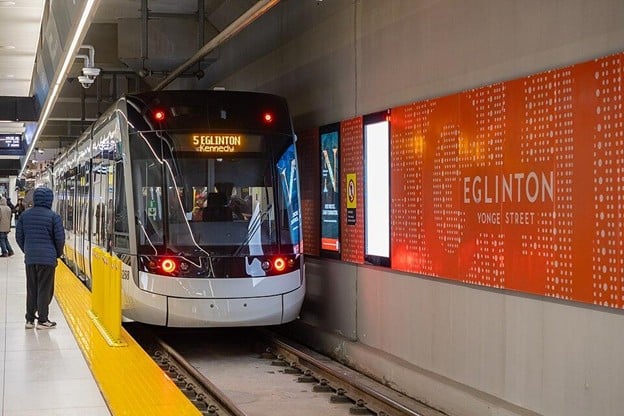
53 million riders are estimated to use the Crosstown LRT by the time it’s finished, and that has significant implications for Toronto’s real estate market. Houses and other structures along this route will rise in value, like all buildings situated near public transit do. And condo developers are already starting to capitalize on the future LRT.

Take, for example, 155 Redpath, a development by Freed Developments and CD Capital Developments. The tower, scheduled to be finished by 2017, houses 470 units ranging from 377-1,500 square feet, with amenities ranging from indoor/outdoor yoga studios to a fire pit and outdoor pool. This will be only one of many developments to take advantage of the expected northerly migration. As  Toronto Chief Planner Jennifer Keesmaat has said,

There’s an opportunity, in keeping with this notion of building complete communities, to spread some of [the city’s] density out, particularly along our light-rail transit corridors,” she said. “If you think about it, there’s, along Eglinton, a lot of mid-rise sites where we can be filling in some of the gaps in the infrastructure of the city. And if we can do that along an area where we have this spectacular new light-rail transit, and hopefully new cycling lanes, that could be a really important spine in the city.”

What should developers do with a whole new “spine” to the city? The Eglinton corridor poses a genuine opportunity for developers, business owners, and community leaders to try out new things with the population the LRT is sure to bring.

Toronto innovation need not be limited to places like MaRS — it can happen in the city’s residential neighbourhoods, too. Could the changes that have come to places like Evergreen Brick Works and Wychwood Barns happen there, too? Could the BIAs that have done so much for Danforth East and Christie Pits do the same thing for Eglinton East? If you’re curious about answers to those questions (or you have questions of your own), you may be interested in Meeting of the Minds Toronto, a conference on urban sustainability and development.

Categories: Blog


This Summer, We’ll See You In Muskoka!

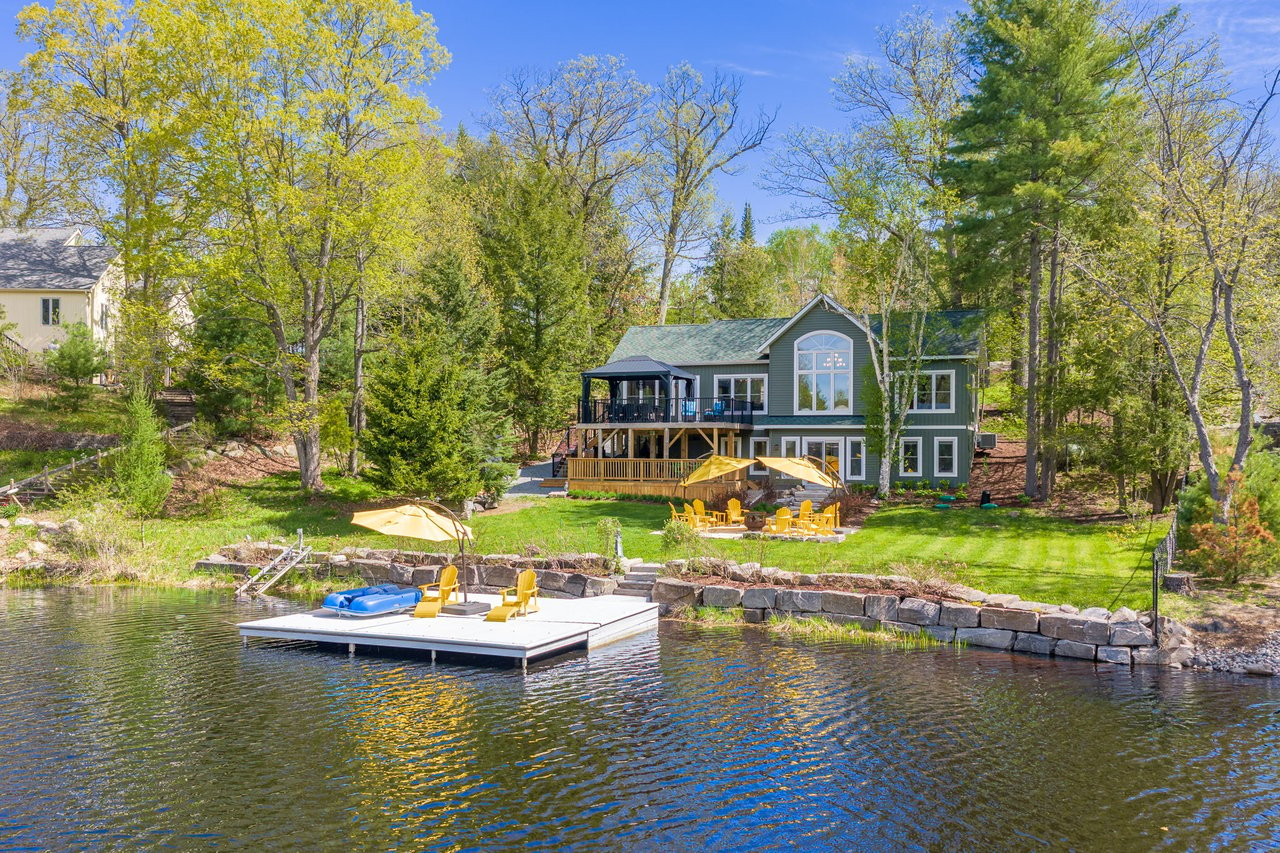
The view from Lake Joseph Cottage, currently listed by Harvey Kalles Real Estate agent Richard Scully.

Did you know that Harvey Kalles also has a cottage-country office in Muskoka? That’s right: you can also savour the luxurious Harvey Kalles Real Estate experience while shopping for your next cottage or getaway, or selling the one you and your family have outgrown. Our Northern agents are happy to help you find peace and serenity on the lake and in the trees, with all the comforts of home still intact.

For example, Chelsey Penrice’s featured properties are within close proximity to Toronto, but are tucked away near Port Carling and the Rocky Crest Resort. The home at Rocky Crest can be used year-round, allowing residents to avail themselves of the nearby golf course — membership comes complementary with homeownership.

If you’re looking for something a bit more private (and by “a bit,” we mean “a whole lot,”) agent Richard Scully is representing this stunning property on Lake Helen’s Island. The property boasts a guesthouse in addition to the main house, a 3-slip boathouse, a new deck, a 2-story fireplace, wraparound views, a slate tile sunroom big enough for family dinners, and elegant wrought iron railings to complement the reclaimed and hardwood interiors.

Or, if you have your own design in mind, consider this Kahshe Lake listing from Maria Tingey, a beautiful six-acre parcel of park-like land featuring both shallow and deep water, and a private beach. Two cottages now exist on the property, one with 3 bedrooms and 2 baths and recent renovations to the wiring and plumbing. The other cottage is older, and could either use some renovation, or be removed in favour of another, bigger property.

As you can see, the possibilities are endless in Muskoka. These listings are only a small sample of what we have available. The next time you’re up, come on over! We’d love to share our neighbourly spirit with some potential new neighbours!

Categories: Blog


Why Are We So Obsessed with the Idea of a Toronto Real Estate Crash?

36 Flamingo Rd, listed by Harvey Kalles Real Estate agent Esther Osher.

Why are we fascinated by the ongoing media predictions of a Toronto real estate “crash” – one that hasn’t actually happened, despite years of worrying, wondering and waiting?

The prophecies of Toronto’s real estate crash have only continued into this spring, but whether they’ll actually come true is a different matter. Whether or not you think Toronto is in for a correction depends a great deal on how you read the numbers.

For example, The Economist thinks Canada’s housing market is a bubble due to burst, based on polling data from prospective buyers:

Home sales in March were 15% down on a year earlier. Buyers are in short supply. A recent poll showed that only 15% of Canadians are likely to buy a home in the next two years, down from 27% last year—the steepest decline in the 20-year history of the survey. After a big boom, the housing bust will be a wrenching affair.

First-time buyers are more likely to enter costly bidding wars, but seasoned veterans aren’t often willing to join the fight. And the total number of willing first-timers is lower: Millennials saddled with student debt can’t afford down payments. No, not even Canadian Millennials. And with the recent changes to the mortgage rules, they have even less opportunity to do so. So the buyers who should be leading the market sometimes can’t.

However, there are other market forces at work here, such as new arrivals to Canada – many of whom are wealthy; remember that Canada is the 8th most popular destination for the world’s wealthy to live – or families who need more space than the current market of apartments and subletted condos can provide. So as much as the picture looks bleak for many Millenials, it isn’t so for global money, or for the many affluent families who are purchasing the million-dollar semis in the Beaches and the Annex.

One big question here is whether potential sellers are willing to lower their prices. Statistics would seem to indicate that they’re not: sales are down, but prices are up. It will take special circumstances for homeowners to decide that Toronto is no longer desirable, whether it’s an inability to climb steep basement stairs or rising property taxes or a lost job or pension. But many homeowners may simply decide to ride it out and work on becoming mortgage-free before buying their next home — which in turn means a market slowdown. This is great news for anyone selling re-fi, but it’s frustrating for new buyers.

This isn’t to say that there’s no hope for the market. As The Financial Post points out, the Canadian and American real estate markets are different, which means they have reacted to the 2008 mortgage crisis and its surrounding recession in different ways:

Canadians have more equity in their homes than Americans did, the default rate is lower, the sub-prime market is tiny, and mortgage interest is not tax-deductible, so there’s no incentive to build up debt.
Finally, mortgages are structured as recourse loans in which assets other than the house are held as collateral. That makes Canadian homeowners less likely to walk away than their American cousins.

Canadians may simply be slower to move on home sales than Americans, which means that their market will naturally be slower. But as for a big crash, a bang rather than a whimper, only a few events can bring about such a consequence:

  • A sudden rise in the interest rate – this is unlikely.
  • Some kind of highly unlikely major disaster in Toronto that makes the whole city seem undesirable as a place to live (and no, the Rob Ford scandal doesn’t count).
  • A sudden change in the GTA that makes outlying areas more desirable to those committed to living in Toronto (improved transit, services, shopping, etc.). This is the most likely of these scenarios, and in fact is already happening on a very gradual level, but for many reasons – proximity to the city and jobs, the desirability of many old Toronto neighbourhoods, simple prestige – the allure of the city of Toronto isn’t going anywhere. It will always be desirable.

We’ve already seen a cooling in the market year-over-year from 2012 to 2013: inasmuch as there was ever going to be a “crash”, this is probably it. But a burst bubble, US-style? Not going to happen, in our opinion.

Categories: Blog


Harvey Kalles Real Estate Presents… The Wolf House

On behalf of our agents The Thompson Team of Nick and Donna Thompson, Harvey Kalles Real Estate is proud to present The Wolf House, one of the greatest gems of Toronto’s luxury real estate market.

Built in 1974 by award-winning architect Barton Myers, The Wolf House is proof that Toronto’s historic architecture need not be Victorian, and that modern architecture need not be cold or clinical. With three floors, three bedrooms, and three bathrooms, and 4,693 square feet, Wolf House is right for families, professionals, those who love to entertain, and those who long to stay in. Myers won the prestigious Architectural Record House of the Year Award for Wolf House, and visitors immediately understand why: golden pear wood panels and cabinets, Carrara marble surfaces, floor to ceiling windows with stunning views of the Rosedale ravine system, hardwood maple tongue and groove flooring, and many other features make this modern home a delight for the senses. The house’s charm has only endured: in 2012, it was the Toronto Life Home of the Year.

Lawrence and Mary Wolf have enjoyed their home at 51 Roxborough Drive for many years. In 2008, they asked New York architect Heather Faulding to re-design the interiors of the kitchen and living room. She left the house more than ready for entertaining, and Mr. Wolf refers to the space as “The most glorious dining room in all of Toronto.” Wolf House also features the landscape designs of Walter Kehm, and the cabinetry and other interior designs of Yabu Pushelberg. All three have worldwide design experience, bringing a global spirit to this piece of Toronto’s architectural history.

Nestled deep in the trees of one of Toronto’s oldest and greenest neighbourhoods, The Wolf House allows for a sense of peace and seclusion in the heart of the city. From the large oval Jacuzzi tub, one can look out on the ravine from the floor-to-ceiling windows, or draw the solar shades before descending to the heated limestone floor. The house features multiple innovations in environmentally-friendly technology, such as LED lights, solar heating in the in ground pool, double-panelled windows, and retractable ceiling awnings. This does not mean a shortchange in luxury: the kitchen features two Dacor warming drawers, a wine cooler, a SubZero refrigerator, and built-in Miele appliances, including a dishwasher, coffee maker, and vegetable steamer.

The Wolf House is the perfect home for someone who can appreciate its unique juxtaposition of industrially-influenced architecture and openness to the natural landscape. The Wolf House embodies exciting dichotomies for its new inhabitants: strong but vulnerable, urban but hidden, modern but natural. It is not a standard home, but it is a home for people with the highest standards.

Find out more about The Wolf House, and feel free to register your interest, at Donna and Nick Thompson’s website.

Categories: Blog